

Buying
Buying a condo in Toronto in 2026

By Elliott Macgregor, B.Sc.Soc., REALTOR®, Big City Realty Inc., Brokerage
12 min read · Published · Last updated
Short answer
Working with buyer clients in resale involves a process that unfolds organically. First, we meet to discuss timeline, firm budget, style of home, location and other preferences. When we go out and view properties in-person, I soak in the client feedback (what they like, dislike etc.) and the picture becomes clearer. Once I'm sharp on what the client actually wants, I help them navigate the marketplace and close on the right property. My in-depth knowledge of Toronto condos helps make the process an efficient one for the Buyer. If it's a pre-construction/new home, we follow a different path, but a similar process.
Figures are as of November 2026 and are estimates for illustration. This is not tax, legal or financial advice; confirm with the official sources linked below and with your lawyer and lender.
Yes, I understand I'm a sales agent (everything is going to sound nice etc.). So this post is mostly math.
I've been trading in real estate full-time since 2015, and I've shown thousands of apartments in hundreds of buildings across the GTA. Here's the order I'd do it in.

How much do you need for a down payment on a Toronto condo?
The minimum is 5% of the first $500,000 and 10% of the part above it, on a price under $1.5 million. At $1.5 million or more, it's 20% (CMHC). These minimums, and CMHC insurance, are for a home lived in by you, or rent-free by someone related to you by marriage, common-law partnership or a legal parent-child relationship (CMHC).
So a $650,000 condo needs at least $40,000 down: 5% of the first $500,000 ($25,000) plus 10% of the other $150,000 ($15,000).
With less than 20% down, you need mortgage default insurance, priced on the loan, not the price (CMHC). With $40,000 down, the $610,000 loan is about 94% of the price, so the premium is 4.00%: $24,400, which can be added to the mortgage (CMHC). The 8% Ontario sales tax on it ($1,952) can't go on the loan: it's paid in cash.
If at least one of you is a first-time buyer, or the condo is brand new, an insured mortgage can be amortized over 30 years instead of 25 (CMHC). CMHC's premium for that is 0.20% higher (CMHC Home Start).
Two government accounts help with the down payment, and you can use both for the same home (CRA):
- FHSA (First Home Savings Account): $8,000 a year, $40,000 lifetime, tax-deductible going in and tax-free coming out for a first home. Room only starts building once the account is open, so open it early (CRA).
- RRSP Home Buyers' Plan: up to $60,000 out of your RRSP. If your first withdrawal is between 2026 and 2028, repayments start in the fifth year after, not the second (CRA).
What does the stress test mean for your budget?
Your lender qualifies you at the higher of your contract rate plus 2%, or 5.25%. That applies to uninsured mortgages at federally regulated lenders (OSFI) and to insured mortgages (CMHC). At a 4.00% rate, you're tested at 6.00%. At 3.00%, the test is 5.25%, the floor.
So the number that matters is what you can carry at the qualifying rate, plus condo fees and property tax, not what the bank will lend you. Get pre-approved before you look.
What are the closing costs on a Toronto condo?
CMHC says closing costs usually run 1.5% to 4% of the purchase price, due on the day you take ownership (CMHC homebuying guide). In Toronto, expect the high end of that range unless you qualify for both first-time rebates, because Toronto buyers pay land transfer tax twice: once to Ontario, once to the City.

On a $650,000 condo, at current rates, you'd pay $9,475 to Ontario and the same again to the City of Toronto: $18,950, about 2.9% of the price, from tax alone.
First-time buyers get up to $4,000 back from Ontario and up to $4,475 from the City, which brings that $18,950 down to $10,475. Both rebates have conditions (Ontario, Toronto):
- You've never owned a home anywhere in the world (stricter than the FHSA's four-year test).
- You move in as your principal residence within nine months.
- You're a Canadian citizen or permanent resident, or become one within 18 months.
- If your spouse owned a home while you were spouses, neither of you gets them.
With a co-buyer who isn't a first-time buyer, a parent for example, each rebate shrinks to the share of the buyers who qualify (different rules apply to a spouse who owned a home only before you became spouses) (Ontario, Toronto Municipal Code, s. 760-60).
If a buyer is a foreign national, Ontario's 25% non-resident speculation tax and Toronto's 10% municipal one can apply on top of the land transfer tax (Ontario, Toronto). Ask your lawyer before you sign.
The rest of the list:
- Legal fees and disbursements (ask your lawyer for a quote up front)
- Title insurance (optional in Ontario; your lawyer has to tell you that: Law Society of Ontario, Rule 3.2-9.4)
- Adjustments, i.e. paying the seller back for property tax and other bills they've prepaid
- A home inspection, if you do one
Cash to close calculator
Put in the price of the condo you're looking at, and it adds up the cash you'd need on closing day: the down payment, both land transfer taxes and the sales tax on mortgage insurance. Choose "Yes" under first-time buyer to see what the rebates take off. It starts at $650,000, runs in your browser and sends nothing. It's the same math I do when a client sends me a listing.
Minimum on this price: $40,000
| Down payment | $40,000 |
|---|---|
| 8% Ontario sales tax on mortgage insurance | $1,952 |
| Ontario land transfer tax | $9,475 |
| Toronto municipal land transfer tax | $9,475 |
| Cash to close, before legal fees, adjustments and moving | $60,902 |
Loan before insurance: $610,000 (93.85% of the price). CMHC premium for a 25-year amortization: 4.00% = $24,400, added to the mortgage (total mortgage $634,400), not paid in cash.
Estimate, not advice, as of November 2026, for a home you'll live in. Not included: legal fees, title insurance, adjustments, inspection, moving, and the non-resident speculation taxes if a buyer is a foreign national.
How it works: down payment rules and the $1.5 million insurance cap from CMHC; with less than 20% down, CMHC's premium on the loan (25 years): 2.80% up to 85% of the price, 3.10% up to 90%, 4.00% up to 95% (4.50% with a non-traditional down payment) (CMHC), plus 8% Ontario sales tax on it, in cash (CMHC); land transfer tax and first-time rebates from Ontario (refund up to $4,000) and the City of Toronto (rebate up to $4,475; higher rates above $3 million since April 1, 2026). Rates as of November 2026, rounded to the dollar.
What should you read in a status certificate?
A status certificate is the condo corporation's official snapshot of the unit and the building. Read it for the fees and arrears, the reserve fund and anything that could raise common expenses. Anyone can request it. The corporation must provide it within 10 days of the request and fee, for no more than $100 including taxes (Condominium Act, s. 76; O. Reg. 48/01, s. 18). These are the rules as of November 2026; the province has consulted on changes that could take effect December 31, 2026 (CAO).
Condo fees (common expenses) run the building and fund the reserve fund, i.e. the savings account for major repairs. Each unit pays a fixed share set in the declaration (Condominium Act, s. 84), and a special assessment is split the same way (CAO). A low fee next to a thin reserve fund isn't a bargain.
The pages I'd read first:
- The unit's fees and any arrears. Is the seller behind?
- Increases since the budget. Has the board already raised fees, and why?
- Assessments since the budget. For the reserve fund or the operating fund.
- The reserve fund. The latest study, the balance and any plan to increase contributions.
- Anything the corporation knows that could raise common expenses. The regulation requires this line. Read it slowly.
- Legal actions and judgments, and the number of leased units.
Two protections: a certificate you rely on binds the corporation, and if it isn't provided within the 10 days, the corporation is treated as having issued one showing no arrears, no fee increase and no reserve fund assessment since the budget.
Have your lawyer review it before your offer is firm. That's the one document I'd never skip.
What is a special assessment, and can you see one coming?
A special assessment is a one-time charge on top of your regular fees, used when the corporation comes up short (for example, an unexpected repair, a budget that was too low or a lawsuit). The board can levy one without an owners' vote, and if an owner doesn't pay, the corporation can register a lien on the unit (CAO; Condominium Act, s. 85).

You can't predict one for certain. You can read the warning signs:
- The reserve fund study, which every condo has to update at least every three years (O. Reg. 48/01, s. 31)
- A funding plan that ramps contributions up sharply
- Big repairs listed in the study as due soon, with not enough money set aside
Big repair coming, thin reserve fund: when I see that combination, I want it explained before anyone goes firm.
Should you buy pre-construction or resale?
Both can work. Pre-construction gives you a cooling-off period, a Tarion warranty and possibly HST relief, but you wait and may pay occupancy fees; resale lets you see the unit, the building and its finances first.
Pre-construction (new from the builder)
- 10-day cooling-off period. To cancel, your written notice must reach the builder within 10 days of the latest of the disclosure statement, the condo buyers' guide or your copy of the signed agreement, not from the day you sign (Condominium Act, s. 73). That's your window to have a lawyer read the agreement.
- Tarion warranty. 1 year for workmanship and materials, 2 years for things like water penetration and building systems, 7 years for major structural defects (Tarion), up to $300,000 per unit (Tarion).
- Deposits. Tarion protects condo deposits up to $20,000 (Tarion). By law, the builder holds deposits in trust unless they're secured by deposit insurance (Condominium Act, s. 81). Ask how yours is protected before you sign.
- Interim occupancy fees. If you move in before the building is registered, you pay a monthly occupancy fee (interest on the unpaid balance, estimated property tax and projected condo fees). It doesn't go toward the price: it's money spent, not equity (Condominium Act, s. 80; HCRA).
HST relief (new homes only):
- Federal, first-time buyers: up to $50,000 of the GST back (full up to $1 million, phased out by $1.5 million) on a home you'll live in as your primary residence, as its first occupant, with the builder's agreement signed on or after March 20, 2025 and before 2031 (an older agreement doesn't qualify by being assigned or changed later) (CRA, CRA memorandum 19-3-10).
- Ontario, first-time buyers: up to $80,000 of the 8% provincial part of the HST, on the same conditions (CRA).
- Ontario, agreements signed April 1, 2026 to March 31, 2027 (on an assignment, both the builder's agreement and the assignment; changing an older agreement doesn't count): up to the full 13% back, at most $130,000 in total, federal and Ontario first-time rebates included, if you or a relation will live there as a primary residence and be its first occupant, and construction starts by December 31, 2028 and is substantially complete by December 31, 2031 (CRA, Ontario). The relief shrinks above $1.5 million; at $1.85 million and above, only Ontario's older new-home rebate of up to $24,000 is left. Ontario's own payment is expected to start in early 2027, and that older rebate will generally end for agreements signed from April 1, 2027 (Ontario Fall Statement).
- Renting it out: you may qualify for Ontario's rental version instead (the Enhanced New Residential Rental Property Rebate), which has its own conditions (Ontario, CRA).
After the province announced the $130,000 in March 2026, I wrote:
THOUGHTS.... It will be interesting to see which builders actually RAISE their prices in response to this (i.e. preventing a full flow-through of the incentives to the buyer).
I still think that's the question. A rebate only helps you if the price didn't move up to meet it.
Resale
You see the actual unit, the actual building and its actual finances (the status certificate) before you commit. None of the new-home HST relief applies to resale.
Is now a good time to buy a condo in Toronto?
Here's how I look at it. In August 2026 I wrote that the average selling price of a condo-apartment in downtown Toronto was down 23.9% from the peak (March 2022). The one thing you can do is look to purchase something that BEATS that spread - i.e. target a property that is 30%+ off the peak.
Example: a unit that sold for $800,000 in March 2022. At 23.9% off, it's $608,800. At 30% off, it's $560,000. The second number is the one I'd want to see.
For the whole City of Toronto, not only downtown, TRREB's Market Watch shows condo apartments selling for an average of $659,214 in October 2026 (median $545,000), with the average price down 5.6% and sales down 10.7% from October 2025 (TRREB Market Watch, October 2026).
In the same August 2026 note, I wrote: The last major real estate downturn lasted from 1989, until 1995. If we are to use this period as a benchmark, we are in year five of a six-year unwinding. That's a benchmark, not a promise. Nobody can tell you the bottom, and I won't pretend to.
Buying a condo to rent it out?
Sort out the financing first. The 5% minimum down payment and CMHC insurance are only for a home lived in by you or, rent-free, by someone related to you as described in the down payment section (CMHC), so the calculator's down payment and insurance figures don't apply to a condo you'll rent out. Ask your lender what down payment it needs. Then look at the rental market: that's what pays your carrying costs.
In order to gauge the strength of the rental market, the first thing I do is look at condos in downtown Toronto. This is because condos are the entry-point for rentals, and downtown Toronto is where the largest segment of renters gravitate to. If the foundation of the rental market is weak, then this weakness will cause the entire market to slide.
Two bedroom rents can only be as strong as one bedroom rents; townhome rents are supported by two-bedroom rents; detached home rents are supported by townhome rents, etc. In October 2026 I wrote that there was only 1.14 months of inventory for condo rentals in downtown Toronto (very strong).
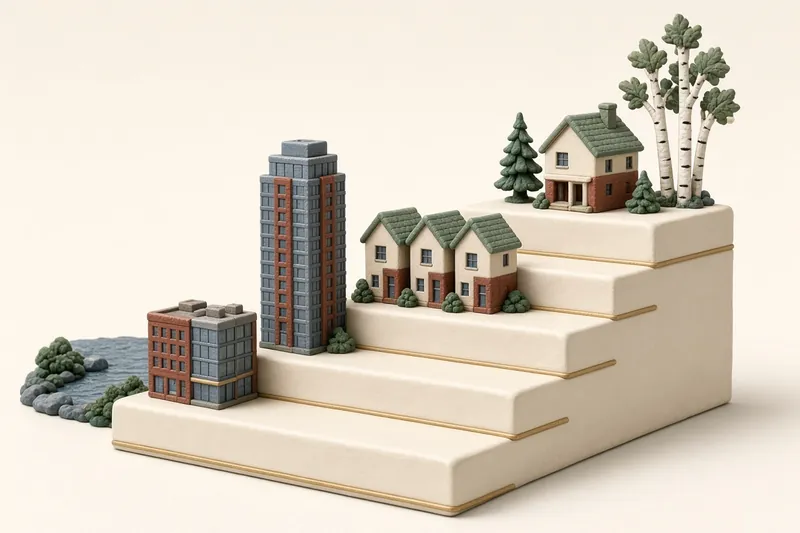
So if you're buying a two-bedroom to rent out, check what one-bedrooms in the same building lease for first.
Then run the carrying costs at the stress-test rate, not your contract rate. If the rent doesn't cover the mortgage, fees and tax at that rate, you're betting on prices, not buying an income property.
How do you make a strong offer in this market?
In May 2025 I wrote: Buy slow: take your time, find the right property, do your due diligence, grind the sellers down on price (if you miss out on a property, there's more coming down the pipe, don't worry about that).
1. Price it off every comparable, not the convenient ones
When I pull comparables, I show all of them, without 'cherry-picking' what is and is not comparable.
2. Ignore what the seller says they need
"What you paid for the property, what its carrying costs are, how much you 'need to get' for it.... None of this has anything to do with what its market value is. Every property has a range/price-point at which it will sell."
3. Go in prepared
Pre-approval done, deposit ready, lawyer lined up to read the status certificate. When you enter a situation with confidence, you change the outcome of that situation.
Common misconceptions about buying a condo in Toronto
"First-time buyers don't pay land transfer tax"
Most still do. The two rebates cover all of the tax only up to about $368,000 (Ontario) and $400,000 (Toronto).
"The reserve fund will pay for upgrades"
It can't. The reserve fund can only be used for major repair and replacement (CAO reserve funds guide).
What to do next
- Open an FHSA now, even with a small amount.
- Get pre-approved, then check what you can carry at the qualifying rate.
- Put your cash to close on paper with the calculator above, then add legal fees and adjustments.
- Read the status certificate with your lawyer before your offer is firm.
- Price your offer off every comparable, not the asking price.
Looking at a condo in Toronto?
My approach as a sales professional is not to be a market cheerleader. But rather call it how it is - straight down the middle, no spin. If you want to buy, I'll tell you where you have leverage. If you want to sell, I'll tell you what you need to do to get the job done. If you don't want to do anything, cool:) Send me the listing, and I'll do the numbers for you.
Elliott Macgregor
REALTOR®, Big City Realty Inc., Brokerage
When Elliott decides to take on a client, he goes all-in, on every deal, every time. When you're spending time with him as his client, you're getting 100% of his attention.
Frequently asked questions
Can I use my FHSA and the RRSP Home Buyers' Plan together?
Yes. CRA says you can use both for the same qualifying home, as long as you meet the conditions for each withdrawal.
How much is land transfer tax on a condo in Toronto?
Toronto buyers pay it twice: once to Ontario, once to the City. On a $650,000 condo, that's $9,475 to each, $18,950 in total, at rates as of November 2026. First-time buyers who qualify get up to $4,000 back from Ontario and up to $4,475 from the City.
How long is a status certificate valid?
The Condominium Act doesn't give it an expiry date. It speaks as of the day it's issued, and its reserve fund balance is as of a month-end within 90 days of that date. If it's a few months old, ask for a fresh one before you go firm.
When does the 10-day cooling-off period start on a pre-construction condo?
From the latest of three: the disclosure statement, the condo buyers' guide or your copy of the signed agreement, so not always the day you sign. To cancel, your written notice must reach the builder within those 10 days (Condominium Act, s. 73).
Do interim occupancy fees go toward the purchase price?
No. If you move into a new condo before the building is registered, the monthly occupancy fee covers interest on the unpaid balance, estimated property tax and projected condo fees. It's money spent, not equity (Condominium Act, s. 80; HCRA).
Can I buy a condo to rent out with 5% down?
Not with the 5% minimum. That minimum, and CMHC insurance, are for a home lived in by you, or rent-free by someone related to you by marriage, common-law partnership or a legal parent-child relationship (CMHC). Ask your lender what down payment it needs.
Sources, all checked on : CMHC purchase fact sheet · CRA · OSFI · Ontario · City of Toronto · Ontario e-Laws · Condominium Authority of Ontario · Tarion · Home Construction Regulatory Authority · Law Society of Ontario · Elliott's own writing · TRREB Market Watch, October 2026
Not intended to solicit parties currently under contract with a brokerage.